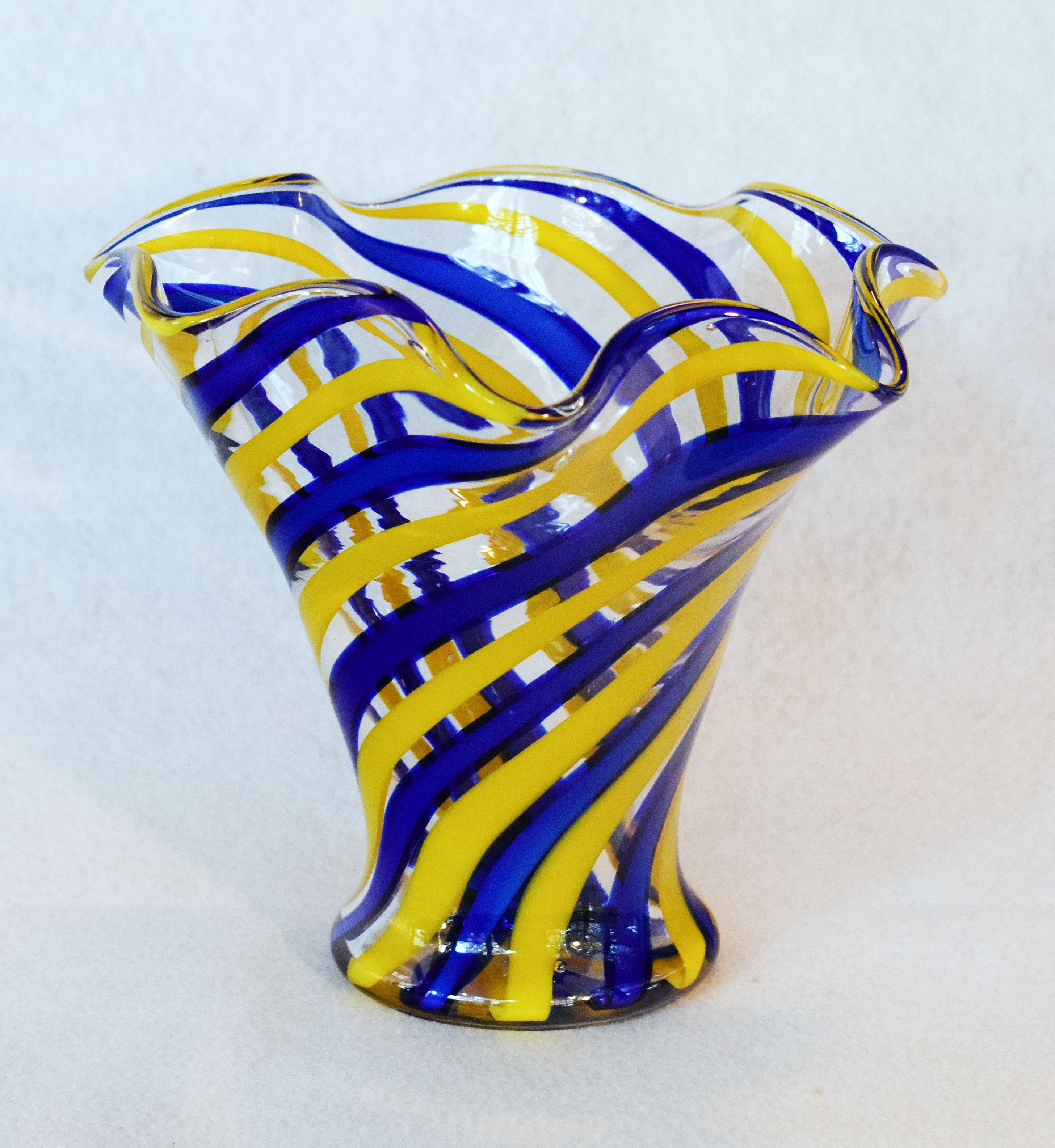
Back in August I took a four-day workshop with Scott Benefield at the Toledo Museum of Art. While Scott’s use of cane and murrini is fairly contemporary, he has an extensive knowledge of historical glass and traditional venetian cane technique. There are plenty of YouTube videos of people pulling cane and doing cane roll-ups, but seeing it done doesn’t begin to prepare you for doing it yourself. I had done small cane pulls before, probably in the five to six foot range, but we immediately jumped into pulling cane fifteen to twenty feet in length. The goal is to create cane about a pencil’s width in diameter, but you’re starting with a log of molten glass about three or four inches in diameter and probably three times as long as that. This is a challenge because you have to keep your glass balanced with each new gather of hot glass and then you have to get the heat profile correct. Imagine having several pounds of hot floppy glass on the end of a punty and having to keep it on balance while you heat it up. When you finally get the heat right, you have to drop the end of your mass of glass onto a post that the person helping you has set up. It’s easy to miss, then you end up with a big mass of molten glass on the floor. (No, glass blowers don’t wear sandals.) Even once you start the pull, it takes experience to pull it out. If you go too quickly, the glass might run away from you and you end up with a lot of very thin cane in the middle and probably a lot of glass left on the punty and the post. If you go too slow, then your cane is too thick and it’s likely to break apart as it cools. You can see Scott in action in
this video.
Once you have your cane, the next challenge is to heat it up on a pastorale and then roll it up onto a blow pipe with a properly sized collar. As the cane heats, it begins to fuse together and then you can roll it up on your blow pipe into a long open tube. You can then close down the open end and then you have created a bubble that you can either blow up as is, or gather over. There are several challenges in this, but if you do it right you can end up with truly amazing pieces. Lino, the grand master of glass blowing, incorporates cane into most of his blown works, mixing in different colors and patterns.
 After the workshop, I starting doing cane work with the help of some friends. It’s certainly more time consuming than just working with powders and frits, but it’s also, for me anyway, much more rewarding.

 After the workshop, I starting doing cane work with the help of some friends. It’s certainly more time consuming than just working with powders and frits, but it’s also, for me anyway, much more rewarding.